Ecosystem Update March 2026
We are pleased to share the March 2026 Ecosystem Update, highlighting developments in the macro environment, market performance, the broader industry landscape, and Advanced Blockchain’s ecosystem.
Macro Overview
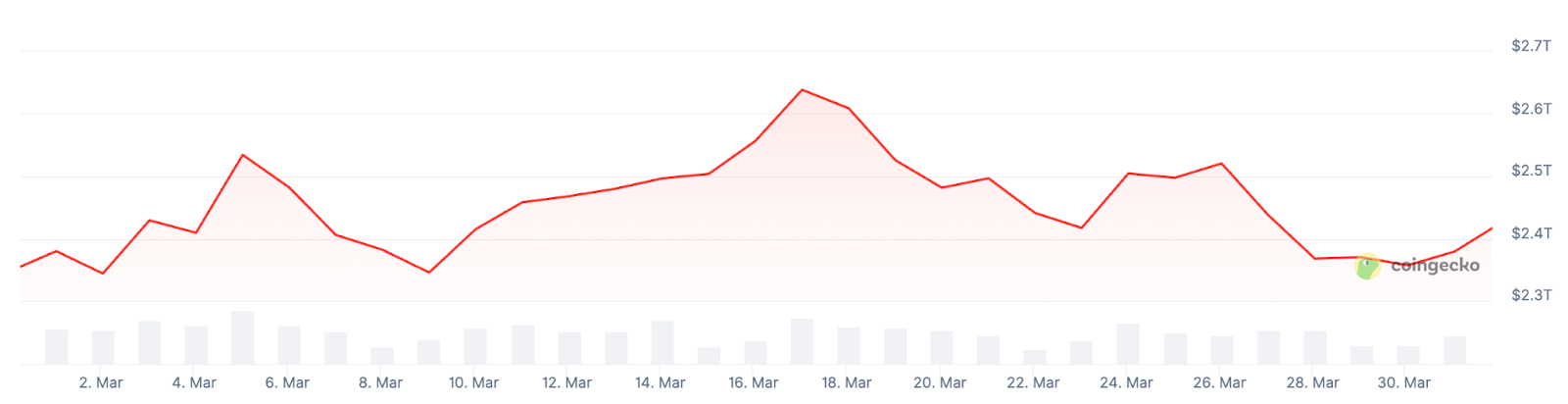
The total crypto market cap oscillated between $2.35T and $2.67T across March, ending roughly where it started - up only 2-3% on a month-open-to-close basis. An early spike to ~$2.55T around March 5-6 reflected relief at the first SEC-CFTC regulatory coordination signals, but faded quickly as Iran conflict anxiety and incoming CPI data cooled sentiment. The month's dominant move was a sustained climb from ~$2.45T to a peak of ~$2.67T between March 10-18, with catalysts stacking in rapid succession: Bitcoin's 20 millionth coin milestone, Strategy's consecutive billion-dollar purchases, the Nasdaq-Kraken tokenization announcement, and ultimately the landmark SEC/CFTC joint taxonomy release on March 17- which the market priced in aggressively in the days ahead of it. Post-FOMC, the familiar "sell the news" pattern kicked in, dragging the cap back to the $2.43-2.50T range for about a week. The most severe drop - from ~$2.52T to the monthly low of ~$2.35T - hit across March 27-29, driven by the massive $14-18.6B Bitcoin options expiry colliding with a still-fragile geopolitical backdrop. A modest recovery to ~$2.42T closed out the month, likely supported in part by Morgan Stanley's Bitcoin ETF filing. Taken together, the chart captures March's defining tension: powerful structural tailwinds from regulation and institutional entry, which was continuously offset by macro and derivatives-driven pressure that prevented any of those catalysts from compounding into a genuine breakout.
Regulatory developments
The most structurally significant development of the month was a coordinated shift by regulators on both sides of the Atlantic toward formal, binding frameworks - ending years of ambiguity.
On March 17, 2026, the SEC and CFTC jointly issued a landmark binding interpretation clarifying how federal securities laws apply to crypto assets. Unlike prior staff guidance, the interpretation carries formal agency authority and provides a five-part taxonomy for crypto assets. The 68-page release named 16 digital assets, - including Bitcoin, Ethereum, Solana, and XRP - as digital commodities under federal law, ending more than a decade of regulatory ambiguity that had kept institutional capital on the sideline. The guidance also clarified that protocol staking rewards, mining income, and airdrop proceeds fall outside securities regulation - resolving longstanding income recognition uncertainty for fund managers. Critically, the CLARITY Act passed the House in July 2025 and cleared the Senate Agriculture Committee in January 2026, but has not yet passed the Senate Forvis Mazars, meaning the classification remains an interpretation subject to reversal rather than permanent statute.
In Europe, MiCA's compliance wave accelerated throughout March. ESMA published a cluster of major guidelines on March 5, covering market abuse supervision, the qualification of crypto assets as financial instruments, and security access protocols for crypto service providers. On the licensing front, StoneX Digital secured its CASP licence under MiCA, granted by the Central Bank of Ireland on March 16, while SwissBorg - holding $1.3 billion in assets under management - recently obtained its MiCA license in France and announced plans to migrate its European operations to a newly authorized French entity, initially targeting Germany, the Netherlands, Italy, and Spain. The broader market impact is structural: SwissBorg's COO predicted that stricter MiCA standards could produce "a market composed of fewer but more resilient players," as some global exchanges reassess their EU capital allocation.
Geopolitical Macro Shock Overrides Crypto-Specific Catalysts
March 2026 should be described as a war-driven macro month, with the conflict involving Iran shaping crypto, commodities, equities, and rate expectations more than any crypto-specific factor. The war mattered because it threatened oil transport through the Strait of Hormuz, turning geopolitical tension into a broader inflation, growth, and liquidity shock. Despite this, Bitcoin recovered above $70,000 at points, briefly reaching around $76,000, then fell back toward the upper-$60,000s by month end. Ethereum had the stronger monthly return of the two, rising 8.20% versus Bitcoin's 2.89%, even though Bitcoin was portrayed as the more resilient asset in broader market positioning. The comparison to traditional markets was instructive: the S&P 500 finished the quarter with its worst decline since 2022, and gold also posted its worst monthly decline in many years - meaning crypto's underperformance was not isolated.
The Federal Reserve's interest rate decision on March 18 was the single most consequential scheduled macro event for risk assets in March. Rate expectations have been a primary driver of Bitcoin's price trajectory throughout the current cycle, and any signal from the Fed about the pace or direction of future policy changes was expected to be immediately priced into both crypto and broader markets. MEXC In 2025, Bitcoin dropped after 7 of 8 FOMC meetings regardless of the actual decision, establishing a persistent "sell the news" pattern.
Accelerating Institutional Participation — From Custody to Infrastructure
Traditional finance institutions didn't just allocate to crypto in March 2026 - they moved to own the infrastructure. Strategy's relentless accumulation ran in parallel with Wall Street exchanges and banks racing to put entire equity markets on blockchain rails.
Institutional conviction from Strategy (formerly MicroStrategy) dominated supply-side headlines all month. During the week of March 9–15, Strategy executed its largest single-week Bitcoin acquisition of the year, purchasing 22,337 BTC for approximately $1.57 billion, primarily financed through its STRC perpetual preferred stock program. Across the full first quarter of 2026, Strategy added nearly 94,473 BTC worth roughly $7.65 billion - outpacing all other public market buyers combined. In late March, the firm outlined plans for up to $42 billion in additional capital raises and signaled ambitions to reach 1 million Bitcoin by the end of 2026.
On March 9, Nasdaq announced its intention to launch an equity token design that puts public companies at the center of ownership rights, investor experience, and governance - allowing issuers to retain more control over their shares in tokenized form. The collaboration with Kraken's parent company Payward will develop an "equities transformation gateway" connecting tokenized equity capital markets with decentralized blockchain networks, combining Nasdaq's regulated market infrastructure with Kraken's xStocks framework so tokenized equities can move fluidly between permissioned institutional markets and permissionless DeFi spaces. The xStocks platform has already surpassed $25 billion in total transaction volume since launching less than a year ago, with over 85,000 unique holders.
The New York Stock Exchange signed a memorandum of understanding with BlackRock-backed Securitize to co-develop the infrastructure behind its planned Digital Trading Platform - a blockchain-based venue designed for 24/7 trading of tokenized U.S. equities and ETFs. Under the agreement, Securitize will act as NYSE's first digital transfer agent, converting traditional stocks and ETFs into blockchain-based tokens while maintaining shareholder records and handling corporate actions like dividend payments. Crucially, unlike many offshore tokenized stock products that function as derivatives, NYSE aims to preserve full shareholder rights including voting power and dividend access. The platform is built on Avalanche for its compliance architecture and settlement finality, and targets a launch as early as Q2 2026, contingent on SEC and FINRA approval.
On March 27, Morgan Stanley filed an amended S-1 registration for a proposed spot Bitcoin ETF - the Morgan Stanley Bitcoin Trust (MSBT) - disclosing a 0.14% annual management fee, the lowest among all U.S. spot Bitcoin ETFs in the roughly $83-84 billion market. The fee undercuts Grayscale's current cheapest option at 0.15% and sits well below BlackRock's IBIT at 0.25%, with Coinbase acting as custodian for cold storage and BNY Mellon managing cash and administration. If approved, MSBT would be the first spot Bitcoin ETF issued directly by a major U.S. bank, leveraging Morgan Stanley's vast wealth management network of trillions in client assets.
Group Update
The group has finalized the FY2025 accounting process for Advanced Blockchain and Incredulous Labs, along with other group entities, while currently wrapping up the accounting for AB Labs DMCC and Brain Networks.
The audit of Incredulous Labs has been initiated with a core focus on internal control measures, along with the regular financial numbers. Moreover, the audit of Advanced Blockchain is currently in its initial phase.
In parallel, the group is conducting a comprehensive strategic review following the outcome of the Annual General Meeting held in February 2026, during which certain shareholder approvals relating to capital measures were not obtained.
On the portfolio side, we have been in continuous dialogue with several portfolio companies and investors within our network regarding potential exits of our equity positions, as part of our broader strategy to optimize the group’s financial position as well as to fund business development activities.
In parallel, we have been in the planning phase for the MVP stage of the project reported at the recent AGM, for which we have received a Letter of Intent.
Portfolio Update
Light Protocol - March was a successful month for Light Protocol on the technical front. The headline update was a new release on March 24, version 0.23.0 of ZK Compression. This is the first production-ready version of ZK Compression V2, meaning developers can now build on it with full confidence. Before this, the V2 upgrade was still in beta testing. That testing phase is now over.
Furthermore, Triton, a major Solana infrastructure provider, removed Light Protocol from its standard data streaming service. The reason: ZK Compression had grown so big it was responsible for more than half of all traffic on Triton's entire network. It was simply too large to share a service with everything else. Developers were redirected to a dedicated tool instead. Light protocol also launched Light Token SDK, a tool that reduces Solana token account fees to $0.001 and works with USDC and other standard tokens.
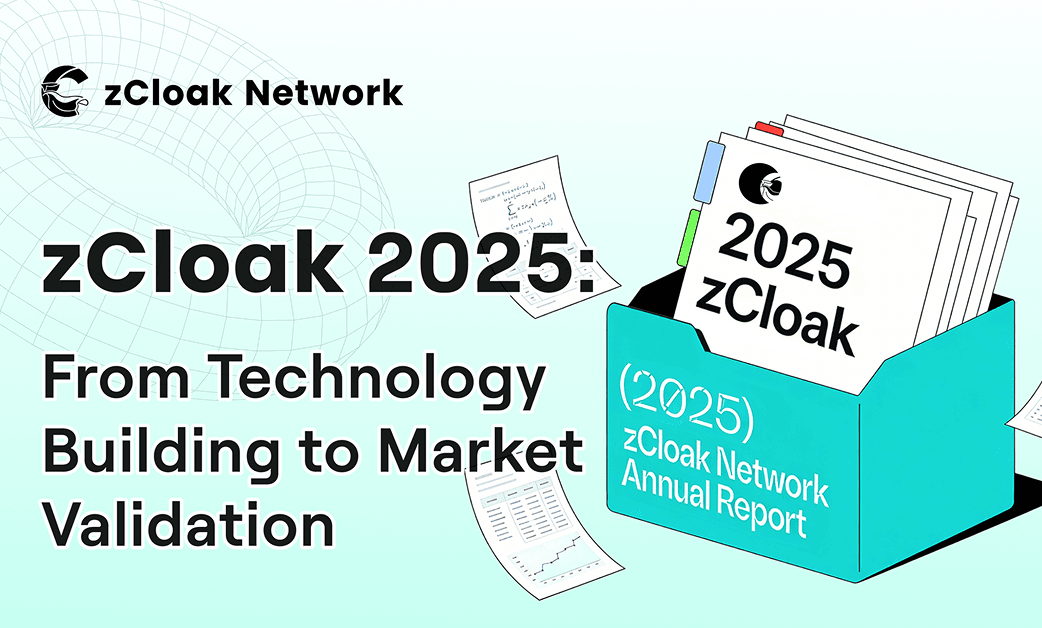
zCloak Network - zCloak Network team released several important updates, including the 2025 Annual Report, the zCloak Network Vision Paper, the zCloak Trust Layer paper, and the Gen-IP article. These pieces explained their vision for building trust, identity, and privacy infrastructure for the AI era.
They also actively promoted the Agent Trust Protocol (ATP). On March 27, they presented ATP during the Internet Computer Global R&D session. Later in the month, the team joined CLAWTIME at AsiaWorld-Expo in Hong Kong. Many people visited their booth and lined up to register AI-Names for their AI agents.
Overall, March showed good progress on both thought leadership and real-world community engagement around AI identity and trust.
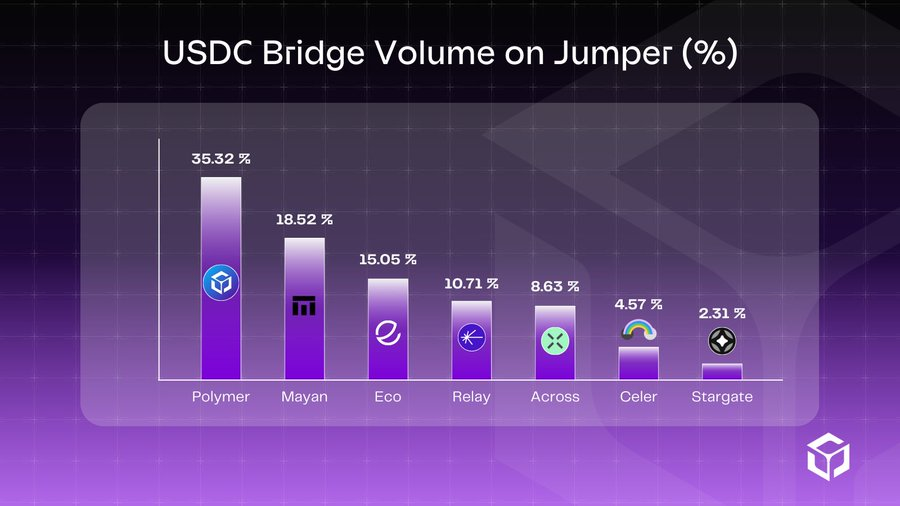
Polymer - Polymer team highlighted strong adoption of their zero-slippage USDC bridging, which now accounts for 35% of USDC volume on Jumper Exchange across 16 major L1s and L2s. Users benefit from exact 1:1 transfers with no slippage and fast settlement.
Moreover, Polymer team has rolled out new live bridges to Arbitrum and Plume Network in partnership with Lifi Protocol. The network kept growing, with total bridged volume crossing $1.5 billion and new chains being added.
Overall, Polymer has been on a steady expansion for its cross-chain payment infrastructure.
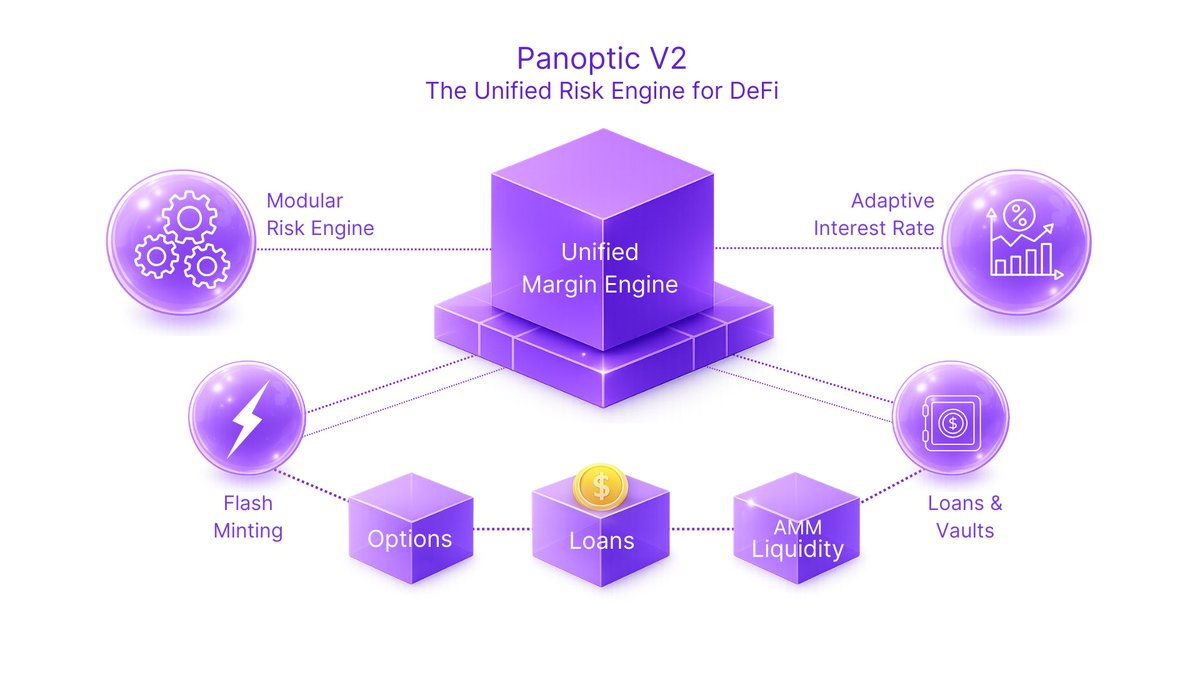
Panoptic - Panoptic published their Code4rena audit report for the V2 codebase and released a new security audit on the vault infrastructure, highlighting their focus on transparency and safety.
Panoptic team also updated the website to showcase perpetual options as DeFi infrastructure, no expiries, any token, up to 10× leverage, and portfolio-aware margin. A new Liquidity Provider Vault was teased as “coming soon,” alongside a joint research report with BlockScholes on advanced trading strategies.
Lastly, Panoptic V2 is at the cusp of its final launch after many months of core development work by the team.

Peaq - Peaq team introduced Robot Money Agent, an autonomous treasury built on peaq’s stack and incubated by Generative Ventures and ZHC Institute. It gives machines diversified access to stablecoin yields, DeFi, RWAs, and token allocations voted on by $ROBOTMONEY holders.
A tokenized robo-farm in Hong Kong became the first real-world machine to invest $5,000 in $ROBOTMONEY, with more autonomous investments planned. The network continues to support over 3.3 million connected machines with onchain IDs and financial tools.
Silencio - Silencio team announced a major partnership with Shaip AI, a leading voice data provider trusted by Google, Microsoft, and Amazon and launched an exclusive campaign for the community.
They also rolled out a new in-app feature that lets users convert USDC earnings directly into $SLC to unlock higher earning boosts (up to +100%). Regular payouts continued, with more than $55k USDC distributed in recent months. Silencio was also featured in a Guardian article on the AI data economy.
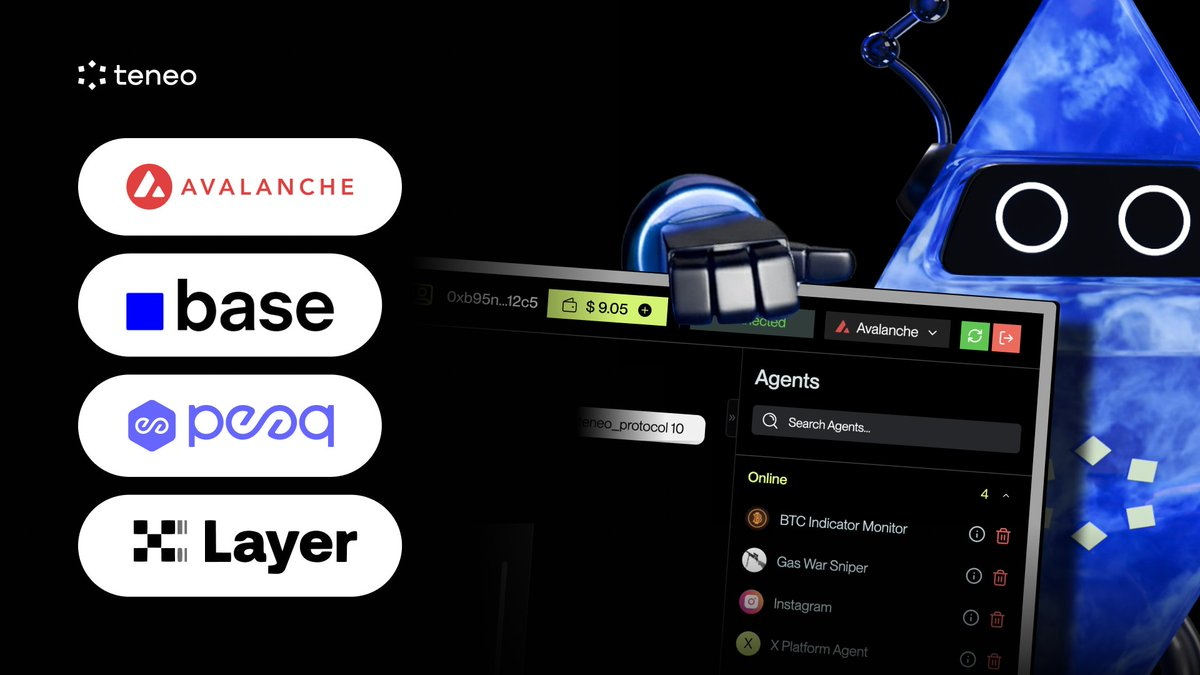
Teneo - Teneo team highlighted practical agent capabilities for Teneo. This was showcased by real-world agent use cases, including instant market research on BTC whale activity and exchange netflows, powered by OpenClaw data and paid autonomously via x402 for just $0.03 USDC.
A multi-chain expansion to Avalanche, Base, X Layer, and peaq with session keys was established, enabling agents run without repeated gas fees or wallet pop-ups. Community nodes were repositioned to power the agent economy by turning real-time signals into structured data for smarter agents.
Teneo's team focused on making agents easy to build, use, and monetize in a permissionless, on-chain environment.
Closing Remarks
March 2026 proved to be a month of notable structural tailwinds met with persistent macro resistance, a tension that defined both the broader market and the work happening across our portfolio.
At the group level, meaningful progress continued on multiple fronts: the audit processes for Advanced Blockchain and Incredulous Labs are underway, the strategic review following the February AGM is progressing, and active dialogue with portfolio companies and investors around potential exits reflects our continued focus on optimizing the group's financial position.
Across our portfolio, a clear theme emerged: projects moving from development into readiness. Light Protocol reached a production-ready milestone with ZK Compression V2, Polymer surpassed $1.5 billion in total bridged volume, and Panoptic stands at the cusp of its V2 launch following months of rigorous development and security auditing. Meanwhile, Peaq, Silencio, Teneo, and zCloak Network each demonstrated tangible real-world traction — from autonomous machine investments to enterprise AI data partnerships and live agent-to-agent commerce.
The broader environment remains challenging, with geopolitical pressures, derivatives-driven volatility, and ongoing regulatory evolution all shaping market dynamics. Yet the landmark SEC/CFTC joint taxonomy release and accelerating institutional infrastructure buildout signal that the structural foundation for the next cycle is firmly being laid.
We thank our shareholders and partners for their continued support and look forward to sharing further progress in the coming months.
Best regards,
Your Advanced Blockchain Team
.svg)

.svg)

